

Indian Journal of Health Social Work
(UGC CARE List Journal)
ART THERAPY IN PSYCHOSOCIAL INTERVENTIONS FOR
PERSONS WITH NEUROPSYCHIATRIC DISORDERS: A CASE SERIES
FROM THE TERTIARY CARE CENTRE
Arun M1, Priya Treesa Thomas2, Keerthana D3, Vasundharaa S Nair4, Sinu Jesin
Timothy5, Pritam Raja6 & Netravathi M7
1PhD Scholar, Department of Psychiatric Social Work, National Institute of Mental Health and
Neuro Sciences, Bengaluru, 2Professor, Department of Psychiatric Social Work, National
Institute of Mental Health and Neuro Sciences, Bengaluru, 3Junior Research Fellow, National
Institute of Mental Health and Neuro Sciences, Bengaluru, 4Assistant Professor, Jindal Institute
of Behavioral Sciences, OP Jindal Global University, Sonipat, Hariyana, 5PhD Scholar,
Department of Psychiatric Social Work. National Institute of Mental Health and Neuro Sciences,
Bengaluru, 6Associate Professor, Department of Neurology, National Institute of Mental Health
and Neuro Sciences, Bengaluru, 7Professor, Department of Neurology, National Institute of
Mental Health and Neuro Sciences, Bengaluru.
Correspondence: Arun M, e-mail: arunmarath24@gmail.com
ABSTRACT
Keywords: Case series, Art Therapy, Psychosocial intervention, Neuropsychiatric Disorders,
Psychological Distress.
Submitted: 22.07.2025 Revised: 04.09.2025 Accepted: 01.10.2025 Published: 28.01.2026
Neuropsychiatric disorders can create disequilibrium in motor functioning, mood, activities of daily living, and overall quality of life of the survivors of neurological disorders (Cucca et al., 2018). Pathophysiology can be infectious, autoimmune, metabolic, or genetic (Isaac & Larson, 2014), apart from neurodegenerative disorders (Willis et al., 2013). Several conditions have neuropsychiatric manifestations that require early identification and management and a unique bio-psycho-social approach to recognition and multidisciplinary management (Butler & Zeman, 2005). The use of art in assessment and therapy has been found to have several benefits from a neuro-biological perspective. People who have participated in art have better self-regulation, relaxation, and improved associated cognitive functioning such as memory, spatial, and visual processing. (Kapitan, 2014). Art therapy activities primarily involve motor, sensory, emotional, visual, and cognitive aspects that connect neurophysiological processes and brain structures. (Lusebrink, 2004). Expressive arts therapy, a therapeutic approach that incorporates art into a counselling environment, is considered an effective psychosocial intervention to alleviate cognitive deterioration and behaviours that interrupt psychosocial functioning and quality of life (Chancellor et al., 2014). It also assists in reducing depressive and anxiety symptoms. The participants express their inner feelings and conflicts through their artwork, an effective therapeutic approach that facilitates healing (Eum & Yim, 2015). Creative activities facilitate a platform for individuals with chronic neurological illness to express their concerns and improve their self-awareness, self-esteem and confidence (Cucca et al., 2018). Concomitantly, art therapy can also improve the concentration and motivation of persons with neurological disorders, which can have numerous effects on treatment and rehabilitation (Kongkasuwan et al., 2016).
This case series describes four scenarios where art therapy interventions were used as an aid to address psychosocial issues in neuropsychiatric disorders. All four participants were receiving inpatient care for neurological illness. The clients were explained the process, and informed consent was obtained from them to engage with the session and use the content for publication. Clients were invited to draw and were reassured that the importance lies not in their drawing capacity and skill but rather in their experiences, which would be given greater emphasis. The art therapy session adhered to a specific format, which included check-in, art-making, verbal processing, and check-out. As a means of initiating the session, a simple breathing exercise and relaxation techniques were introduced. The session commenced with specific prompts to guide the art-making process: What has been your experience living with the illness? What are some of the changes that happened in your life? How do you feel now (after the artwork)? The client was given a choice to pick from a variety of crayons, coloured pencils and pencils, and the sessions progressed with the accompaniment of background music (specifically, western instrumental music). On average, each session lasted around 30 to 45 minutes, which included verbal processing. The audio recording would begin during the verbal processing phase when the client would interpret their artistic output. Detailed notes were kept on each session. The audio recordings were transcribed. The case notes of the session, as well as the transcripts, were analysed using the qualitative framework analysis (Gale et al., 2013)
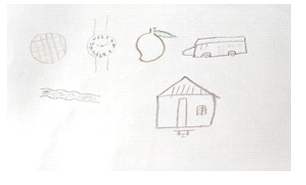
Mr S, a 38-year-old married man from Assam who operates a tyre store, educated to secondary level, was admitted to the tertiary care setting one month ago. Slowness and stiffness in the left side had been present for ten years; tremulousness of the limbs and twisting movement of the neck had been present for three years; dysphagia, slowness and stiffness in the right side, twisting movement of the left side, and abnormal posturing of the limbs had been present for two years. The symptoms appeared gradually and were insidious in nature. A diagnosis of young-onset Parkinson’s disease was made following a detailed examination. Given the neuropsychiatric manifestations involved, the client was referred to the Psychiatric Social Work (PSW) team. The client has been almost bedridden for the last two years and is partially dependent on his wife for all his daily activities. The therapeutic sessions were challenging because the client was apathetic and not motivated to converse. Art therapy was decided as an approach to be used in the team case discussion as a means of establishing a therapeutic relationship and understanding his psychological challenges.
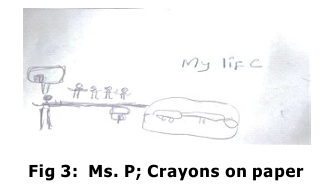
Ms. P is a 23-year-old single female pursuing a bachelor’s degree from a middle socioeconomic background in Urban Odisha. She presented with complaints of weakness in her right upper and lower limbs, as well as eyesight problems. She was diagnosed with Central Nervous System Demyelination (CNS demyelination) and was admitted for in patient care for one week. A routine psychosocial assessment was completed, and it revealed inadequate knowledge and limited coping. She partially depended on her sister for day-to-day activities and was reportedly optimistic about her recovery. During the session, the client was completely silent and tearful, and she could finish the artwork within 7 to 10 minutes. Art therapy was adopted by the therapist to explore psychological distress and coping mechanisms, which were felt to be difficult to express for the client. She consented to the session. The therapeutic process followed the structure of art therapy t o elicit the components leading to psychological distress. Thus, this stage was more therapist-led. In the verbal processing phase, the client completely broke down and articulated significant psychological distress, which was acknowledged and addressed through supportive counselling (Nehra, 2019). This was provided to address these issues, sessions continuing discharge.
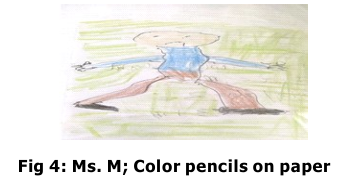
Ms M is a married female who is 31 years old and hails from Kerala. She holds a postgraduate degree in science and was employed as a teacher. She has been experiencing remitting relapsing neurological illness since 2010 and was diagnosed with Multiple Sclerosis (MS). The patient had multiple hospital admissions and outpatient consultations with various healthcare providers. This case was referred to address psychosocial issues and provide intervention. Psychosocial factors were assessed, and interventions were planned. The therapist initiated the art therapy session with the participant’s consent. During the session, various concerns were addressed and discussed. The primary concern was the loss of functionality and the challenges of living with the illness.
Ms S is a 32-year-old married woman from Assam diagnosed with MS. She was independently able to manage all her activities of daily living, and she was able to carry out her role functioning adequately. However, on assessment, the client appeared distressed and was concerned about “Why me?”. A detailed session took place, and art therapy intervention was introduced to the client. In the session, the participant was asked to draw; she drew about activities she was passionate about, such as singing, dancing, trekking, etc. She felt that illness had greatly changed her life, and she would like to return to her favourite activities. Through the drawings, she tried to show how much the illness has affected their pursuit of these activities and thus impacts them mentally and physically. She had articulated the sadness and loss associated with the illness: “I used to dance during my college and school days. And I was a good dancer then”.
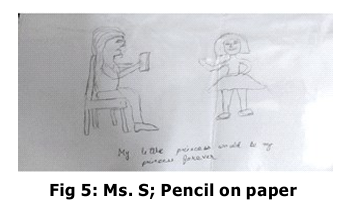
The themes identified in the case analysis focused on how art-making became a good medium to facilitate emotional expression and the facilitation of therapeutic alliance. All clients found the artwork beneficial in their therapy, helping them to move forward in coping. Art therapy was used to establish a therapeutic relationship with the client and helped to elicit their emotional distress so that therapeutic intervention could be provided. Generally, verbal-based interventions are employed in clinical settings for assessment and intervention. Art therapy is a valuable tool for mental health professionals to achieve therapeutic goals. In the first case, the therapeutic alliance may have helped the t herapist continue with psychosocial intervention and address illness-associated concerns. In other cases, the objective was t o use art as a medium to elicit the psychological distress caused by loss of functionality. Through their artwork, the clients conveyed their feelings of hopelessness and distress about the future, using the drawings and subsequent discussions to express the impact of illness and their fears. The clients’ narratives around the artwork also brought out glimpses of hope that they held on to about recovery and being able to do activities that they could not do due to the illness.
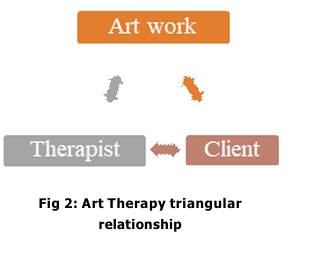
The present case series attempts to bring out the use of art therapy as a medium in psychosocial interventions. The process is captured through the clients’ reflective interpretations of their artwork. Through thematic analysis of their interpretations of artwork, insights are gained about using art. The artwork was integrated into the psychosocial interventions conducted for the clients, and the number of sessions for each participant varied according to the assessment findings. On average, three to five sessions were held. Chronic medical illness has emotional and psychological needs (Safar & Press, 2011), which could be addressed through the judicious use of art as a medium of emotional expression. Chronic illness can create significant psychological distress among individuals, which can curtail their social life as well as social interaction. Art therapy facilitates a dyadic relationship between the therapist and the client, producing positive treatment outcomes (Gazit et al., 2021), as seen in the current case series. In art therapy, the art medium is pivotal as it underscores the significance of expression and communication. Establishing a therapeutic alliance, or relationship, is likely to be enhanced when the client conveys their thoughts and emotions through work. The art medium is the major component of triangulation, fostering a connection between the client and the therapist. The artwork can elicit the emotions of individuals who cannot be reached through verbal processing. This communication occurs through two channels: intrapersonal, where the client communicates with themselves, and interpersonal, where the client communicates with the therapist (Argaman Ben David et al., 2021). Art therapy has demonstrated efficacy in individuals afflicted with a range of chronic conditions, including neurological disorders. It is established that art therapy catalyzes the healing process, reducing psychosocial consequences and improving self-reflection capacity, amongst other positive effects (Shukla et al., 2022). The presence of depression and anxiety symptoms are very common among people with neurological disorders. The clients described in the series were found to be able to express their distress. Other studies have found that art therapy plays a major role in reducing both anxiety and depressive symptoms and also reduces stressful feelings (Hu et al., 2021). Art therapy alleviates distress and enhances coping mechanisms (Uttley et al., 2015).
Mental health professionals will benefit from art therapy training and exposure to the interdisciplinary team to the benefits of art therapy. Using art therapy in psychosocial interventions will facilitate comprehension of the client’s psychological and emotional needs and support them. Declaration of Conflicting Interests The authors declared no potential conflicts of interest concerning this article’s research, authorship, and/or publication. Funding The authors received no financial support for this research.
Argaman Ben David, I., Bat Or, M., Regev, D., & Snir, S. (2021). Changes over time in therapeutic and art therapy working alliances in simulated art therapy sessions. Arts in Psychotherapy, 75. h t t p s : / / d o i . o r g / 1 0 . 1 0 1 6 / j.aip.2021.101804 Butler, C., & Zeman, A. Z. J. (2005). Neurological syndromes which can be mistaken for psychiatric conditions. In Neurology in Practice (Vol. 76, Issue 1). h t t p s : / / d o i . o r g / 1 0 . 1 1 3 6 / jnnp.2004.060459 Chancellor, B., Duncan, A., & Chatterjee, A. (2014). Art therapy for Alzheimer’s disease and other dementias. In Journal of Alzheimer’s Disease (Vol. 39, Issue 1). https://doi.org/10.3233/JAD-131295 Cucca, A., Acosta, I., Berberian, M., Lemen, A. C., Rizzo, J. R., Ghilardi, M. F., Quartarone, A., Feigin, A. S., di Rocco, A., & Biagioni, M. C. (2018). Visuospatial exploration and art therapy intervention in patients with Parkinson’s disease: an exploratory therapeutic protocol. Complementary Therapies in Medicine, 40. https://doi.org/10.1016/ j.ctim.2018.07.011 Eum, Y., & Yim, J. (2015). Literature and art therapy in post-stroke psychological disorders. In Tohoku Journal of Experimental Medicine (Vol. 235, Issue 1). https://doi.org/10.1620/tjem.235.17 Gale, N. K., Heath, G., Cameron, E., Rashid, S., & Redwood, S. (2013). Using the framework method for the analysis of qualitative data in multi-disciplinary health research. BMC Medical Research Methodology, 13(1). https://doi.org/ 10.1186/1471-2288-13-117 Gazit, I., Snir, S., Regev, D., & Bat Or, M. (2021). Relationships Between the Therapeutic Alliance and Reactions to Artistic Experience With Art Materials in an Art Therapy Simulation. Frontiers in Psychology, 12. https://doi.org/ 10.3389/fpsyg.2021.560957 Hluska, M. E. (2016). Understanding the roles and uses of art making in art therapy. ProQuest Dissertations and Theses. Hu, J., Zhang, J., Hu, L., Yu, H., & Xu, J. (2021). Art Therapy: A Complementary Treatment for Mental Disorders. In Frontiers in Psychology (Vol. 12). https:/ /doi.org/10.3389/fpsyg.2021.686005 Isaac, M. L., & Larson, E. B. (2014). Medical conditions with neuropsychiatric manifestations. In Medical Clinics of North America (Vol. 98, Issue 5). https:/ /doi.org/10.1016/j.mcna.2014.06.012 Kapitan, L. (2014). Introduction to the neurobiology of art therapy: Evidence based, complex, and influential. In Art Therapy (Vol. 31, Issue 2). https:// d o i . o r g / 1 0 . 1 0 8 0 / 07421656.2014.911027 Kongkasuwan, R., Voraakhom, K., Pisolayabutra, P., Maneechai, P., Boonin, J., & Kuptniratsaikul, V. (2016). Creative art therapy to enhance rehabilitation for stroke patients: A randomized controlled trial. Clinical Rehabilitation, 30(10). h t t p s : / / d o i . o r g / 1 0 . 1 1 7 7 / 0269215515607072 Lusebrink, V. B. (2004). Art therapy and the brain: An attempt to understand the underlying processes of art expression in therapy. Art Therapy, 21(3). https:// d o i . o r g / 1 0 . 1 0 8 0 / 07421656.2004.10129496 Nehra, A. (2019). Role of neuropsychology in continuum of health care in neurological conditions. In Neurology India (Vol. 67, Issue 2). https://doi.org/10.4103/0028 3886.258013 Safar, L. T., & Press, D. Z. (2011). Art and the brain: Effects of dementia on art production in art therapy. Art Therapy, 28(3). https://doi.org/10.1080/ 07421656.2011.599734 Shukla, A., Choudhari, S. G., Gaidhane, A. M., & Quazi Syed, Z. (2022). Role of Art Therapy in the Promotion of Mental Health: A Critical Review. Cureus. https://doi.org/10.7759/cureus.28026 Uttley, L., Stevenson, M., Scope, A., Rawdin, A., & Sutton, A. (2015). The clinical and cost effectiveness of group art therapy for people with non-psychotic mental health disorders: A systematic review and cost-effectiveness analysis. BMC Psychiatry, 15(1). https://doi.org/ 10.1186/s12888-015-0528-4 Willis, A. W., Schootman, M., Kung, N., & Racette, B. A. (2013). Epidemiology and neuropsychiatric manifestations of Young Onset Parkinson’s Disease in the United States. Parkinsonism and Related Disorders, 19(2). https://doi.org/ 10.1016/j.parkreldis.2012.09.014
Conflict of interest: None
Role of funding source: None
